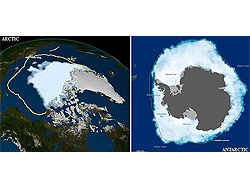
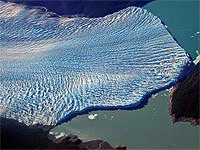
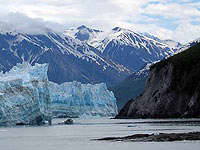
Derretimiento del glaciar Jakobshavn Imagen: Youtube
Tamaño:
Pese a que las temperaturas han descendido en la última década, los glaciares en algunos lugares del mundo siguen desapareciendo (aunque otros siguen creciendo) supuestamente debido al calentamiento global antropogénico, del cual ahora existen muchas dudas basadas en evidencias científicas.
Este es el caso del glaciar Jakobshavn cuya velocidad de derretimiento se ha duplicado en la última década pese a que las temperaturas promedio globales se han enfriado. ¿Qué provoca este fenómeno aparentemente sin sentido? una explicación más sencilla sugeriría que en realidad no existe un "clima global" sino un conjunto de climas regionales, que aún sin explicación, no influirían unos sobre otros o su influencia entre sí sería mínima. Esta teoría tendría más sentido debido a la desproporción de los continentes, los tipos de suelo y biomasa en estos y la desigual intensidad de la radiación solar que llega y se conserva en las distintas regiones del planeta.
Have you previously worked with or heard of RGSL and would like to know where RGSL has gone? Discover the link between RSGL and Reynolds International here.
Climbing Magazine"s Web site contains more than 30 years of rock and ice climbing news, climber profiles, technical information, and gear reviews. You"ll also find message boards, photo galleries, and classifieds
Официальный сайт музея Арктики и Антарктики. Already in the 1920s owing to the dynamic exploration of the Arctic many prominent polar explorers and scientists advocated the idea to establish a polar museum that would
The experience and data on glacier disasters in Switzerland has been systematically collected in the past two decades, and historical sources were analyzed.
The floods, known in Perú as aluviónes, come with little or no warning and are composed of liquid mud that generally transports large rock boulders and blocks of ice.
2026 Ciencia1.com - Ciencia y Tecnología. Permitida la reproducción siempre que se señale la fuente y enlace correspondiente a cada material info@ciencia1.com



 Home
Home  Atrás
Atrás  Arriba

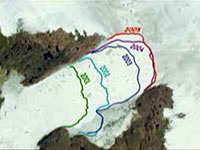
 Imagen: Youtube